Essay
Personal Brands between Attention and Findability
The key point
A personal brand needs connected, traceable evidence of what it stands for today to become legible in AI search. Visibility alone cannot close the gap between self-image and the publicly documented picture. Drawing on my own experience, I explore how these pictures drift apart and can be brought back together.
What question about personal brands does AI search reopen?
In briefIntermediaries shape the picture that reaches a person’s audience. With AI search, I ask who or what selects that picture and what evidence it uses.
Verona Feldbusch was an early example, for me, of a person becoming a brand. How does that public image emerge? And who mediates it? I explore these questions in the context of AI search.
People actively participate in their own marketing. My focus here is on image and media: visible achievement alone does not determine the public picture. Who presents a person, and how, also matters.
With AI search, this question has a new addressee.
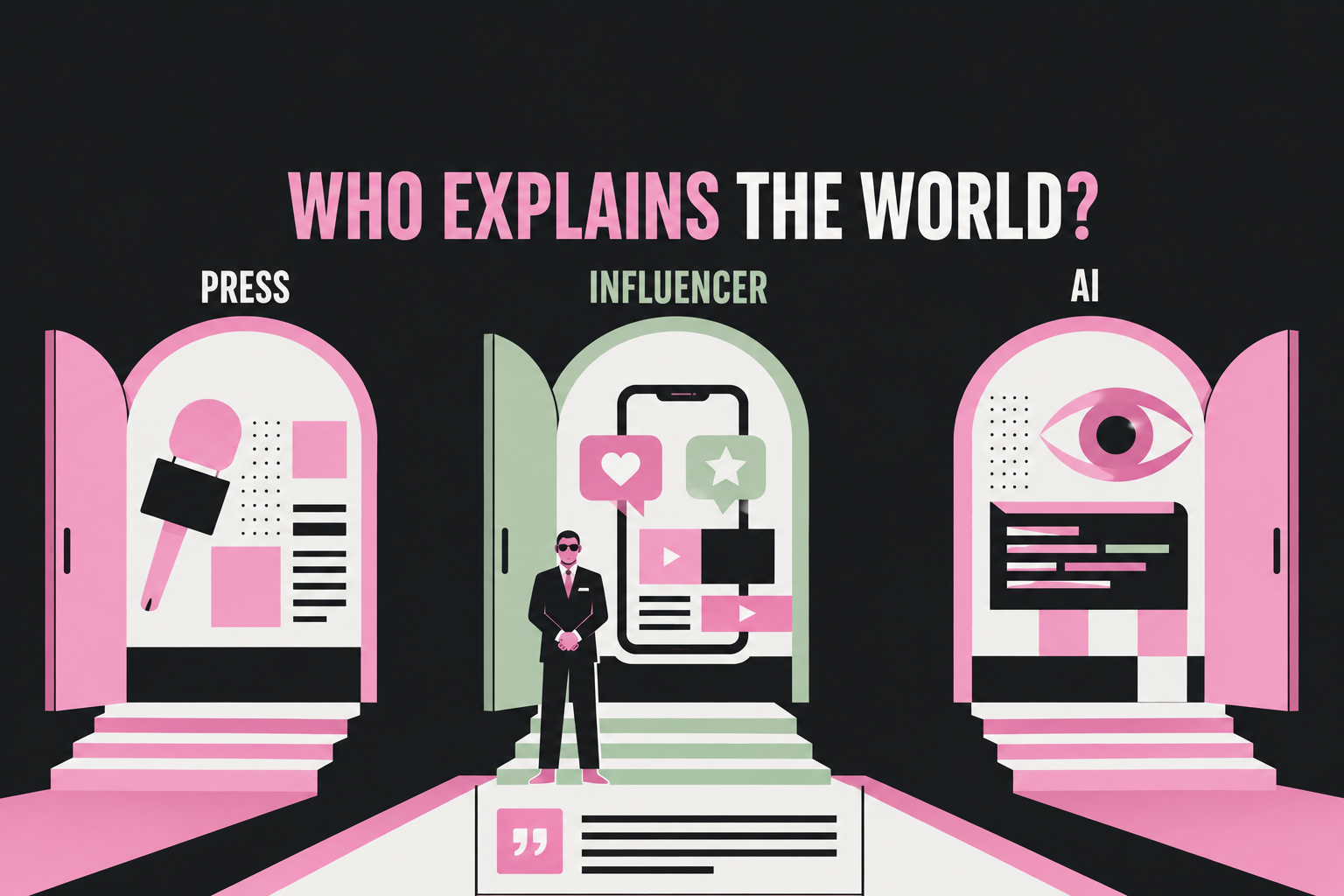
How did visibility change from the newsroom to the influencer?
In briefThe essay traces a move from editorially controlled stages to independent publishing and professional self-presentation. The work of shaping a public image remains. Editorial approval is no longer required, but platforms and their recommendation systems still shape visibility.
First wave: traditional media. Verona, too, had to stage her public persona; she was no passive figure. But recognition came through TV, radio and print, and that was where the gatekeepers sat. An editorial team decided whether you got on the programme. A casting decision determined whether you were right for a presenting or acting role. Without that “yes”, no appearance on those stages.
Second wave: social media. Publishing no longer requires an editor’s “yes”. Anyone can pick up a smartphone and film themselves exercising, cooking, losing weight or travelling. A quick edit in CapCut, and off you go. It sounds easier than it is. It takes practice and planning.
Third wave: the influencer. The hobby becomes serious. An editorial calendar, staged footage, every second calculated for reach and recognition. The same work as at a broadcaster, only without the broadcaster. Nobody casts you. You cast yourself. The tools were open to everyone. They still are today.
The influencer is not the opposite of the old media brand.
It is that brand without an editorial team.
Why does attention not automatically create findability?
In briefA performance can reach people without leaving its substance in a durable, readable document. I therefore distinguish the work of building an audience from the traces a system can retrieve.
Building an audience is work. And many influencers have substance: expertise, a community they have built, educational content, entrepreneurship. The point is not that there is nothing there. The point is the form in which it exists.
The currency of attention is not necessarily the currency of findability.
Self-presentation lives through the performance, the moment, the watching. Much of it exists in what is seen, not in a document. And what is not documented is hard for a model to pick up.
For me, this is the shift: a public image can take shape without traditional media coverage. Influencers shape it themselves and publish through their own channels.
Why do I describe AI as a new mediator?
In briefIn my reading, AI selects from what is tangible, documented and findable about a person. Their own recorded position and corroboration by others become central reference points.
Influencers could publish without an editor’s approval. But intermediaries did not disappear. Platforms and their recommendation systems still helped determine who reached whom. AI answers add another layer of mediation.
The press was an intermediary. Influencers built their own stage. AI now also shapes the picture of them that appears in an answer.
AI thus becomes another intermediary. It processes the traces available to it: text and, depending on the system, images, audio or video too. A performance can therefore also become a source. My focus here is what is traceably documented and findable about a person.
Anyone relying heavily on image should also examine the documented traces. Public text, images and recordings can be machine-processed. How complete and current the resulting picture is remains uncertain.
How do self-image and public image connect in AI search?
In briefSelf-image becomes visible through one’s own verifiable material; public image appears in mentions and connections made by others. The essay also stresses the limit: a strong body of evidence is not automatically proof of quality.
For me, a personal brand is strong when self-image and public image align. Brand philosophy and brand image. What you say about yourself, and what others think of you.
The self-image is the tangible, verifiable substance you make findable yourself. With a position clear enough for a model to pick up. The public image is how the web speaks about you. A backlink, a mention, a citation in a source the model trusts. The press is not dead. It has become a signal. I see links and mentions as a documented form of passing a story on.
For me, both matter: the substance you make accessible and the evidence others provide. Together, they can help build a picture that readers can check. They do not guarantee discovery or citation. Which sources appear in an AI answer depends on the system and the question being asked. And the best documented person is not necessarily the one with the most substance.
Substance alone does not make you findable.
Why did ChatGPT still describe me as a sustainability blogger?
In briefThat earlier work had been documented for years, while my new position had left relatively few traces. My example shows a time lag between personal development and the evidence publicly available about it.
In May I looked myself up in a model. ChatGPT listed me as a sustainability blogger.
That was not wrong. I spent years working freelance for sustainable and organic brands, writing recipes, blogging about the subject and getting involved. I still live those values today, with many lessons learned along the way. The model was not off the mark.
It was right. About an Elfie from yesterday.
My sense of who I was had moved on. The answer mostly reflected my earlier work, which had been publicly documented for years. My new direction had left fewer traces. To me, this exposed a timing problem: I had changed faster than the picture ChatGPT gave back to me. The answer alone did not tell me exactly which information had shaped it.
As an independent communications consultant, I developed and implemented communication strategies for my clients while neglecting my own.
What should brand communication learn from this?
In briefI argue for documenting a person’s new chapter clearly and connecting credible evidence. The past stays part of the story; today’s self-image also needs a findable foundation.
The answer is not to erase the past. Nor to avoid the new medium.
Brand communication and strategy need to adapt as AI answers join traditional media and platforms in shaping public perception. Anyone who wants to remain visible brings the new chapter up to date. Substance that can be crawled. Evidence provided by others.
The aim is to make what I stand for today clear and verifiable, while connecting it to the work that came before. AI helps me sharpen and express that position. This does not mean that other AI answers will automatically catch up.
People help shape their public image. This applies to influencers as well as to their own presence in AI answers. What changes are the systems mediating that picture and the information available to them.
The question is no longer just how people see you. It is which version of you appears in AI answers.
Sources, image credits and method
Sources
Brand theory
- Herbst, D. (ed.) (2003). Der Mensch als Marke. Konzepte, Beispiele, Experteninterviews. 1st edition, Göttingen. Background on the person as a brand.
- Verona Feldbusch/Pooth is an example in my own analysis.
Technical context
- Google Search Central: AI features and your website. Requirements for supporting links in AI Overviews and AI Mode. Inclusion is not guaranteed.
- Google Search Central: Creating helpful, reliable, people-first content. On content quality and reliability in Google Search. This guidance does not describe a universal selection formula for all AI systems.
- TikTok: How TikTok recommends content. An example of how platforms select and distribute content through recommendation systems.
Further reading
- Related essay: The Funnel Is Dead. What Remains. On the shift from clicks to citations and the GEO logic behind it.
Later essays on this theme
- The Human as an Entity. On digital identity, old traces and the connection between sustainability and AI in my work.
- The Mediator Model. On the intermediaries that shape visibility and the selection of sources in AI answers.
Image credits
- Header: concept and composition by Elfie Schürfeld-Todor, generated with AI from an original brief and edited. Stylised Bauhaus composition with three doors, recoloured in rose and sage for the relaunch.
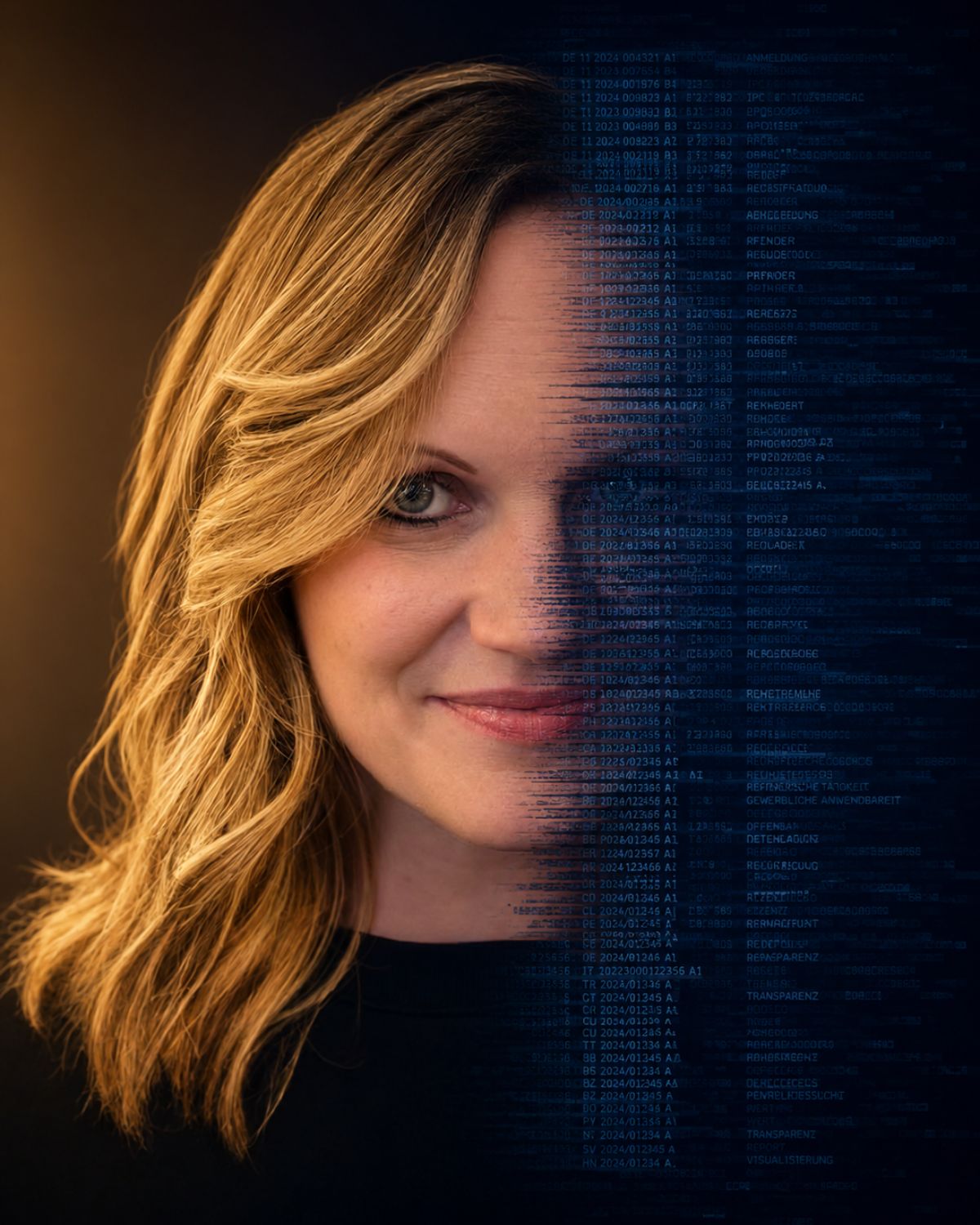
- Portrait in the text: an AI-edited composite based on my own photograph. Concept and composition: Elfie Schürfeld-Todor.
Method
- This essay was written in dialogue between me and an AI model. The arguments, the stance and the editorial choices are mine. The model was a sparring partner and co-author. It helped sharpen my arguments, challenged me, suggested sources and produced drafts for me to rework. Quotes and references are cross-checked. Augmentation, not automation.
Facts and sources reviewed and clarified on 15 October 2026. The conclusions, analogies and judgements in this essay are my interpretation. The original publication date is retained.
Terms from the essays: glossary

About the author
Elfie Schürfeld-Todor is a communications strategist, writer and AI Search Strategist & Project Manager at duwerk. On 11iE, she writes about AI, communication and society. She publishes her art as Euphemia Stokefield.
About me · Facts & sources · LinkedIn